Florida window tinting laws set separate darkness and reflectivity limits for the windshield, front side windows, and rear glass. Drivers across Polk and Lake County ask about these rules before almost every install at Dark Matter Window Tint. This guide explains Florida Statutes 316.2951 through 316.2957 window by window, using the current 2026 statute text. It also covers reflectivity, medical exemptions, tint stickers, and ticket costs.
Table of Contents
What Are Florida’s Window Tint Laws in 2026?
Florida’s tint limits come from Florida Statutes 316.2951 through 316.2957, and the 2026 text matches the 2025 version. Front side windows need at least 28% visible light transmission (VLT). Rear side windows and the rear windshield need 15% on passenger cars and 6% on SUVs, trucks, and vans.
| Window | Passenger Cars (Sedans, Coupes) | SUVs, Trucks, Vans (MPVs) | Max Reflectance | Statute |
|---|---|---|---|---|
| Windshield | Transparent strip above the AS-1 line only | Same as cars | No number set; strip must be transparent | s. 316.2952 |
| Front side windows | At least 28% VLT | At least 28% VLT | 25% | s. 316.2953 |
| Rear side windows | At least 15% VLT | At least 6% VLT | 35% | s. 316.2954 |
| Rear windshield | At least 15% VLT | At least 6% VLT | 35% | s. 316.2954 |
These limits apply to the film and the original glass measured together on the specific vehicle. Drivers comparing shades can preview the ceramic window tinting options in Davenport, FL. Each film shade on that page sits beside these Florida limits.
What Does VLT Mean When a Tint Meter Reads the Glass?
VLT is the percentage of visible light passing through the glass and film together. Lower numbers mean darker windows. Florida law calls this “transmittance” and measures it on the installed glass, never on a loose film sample.
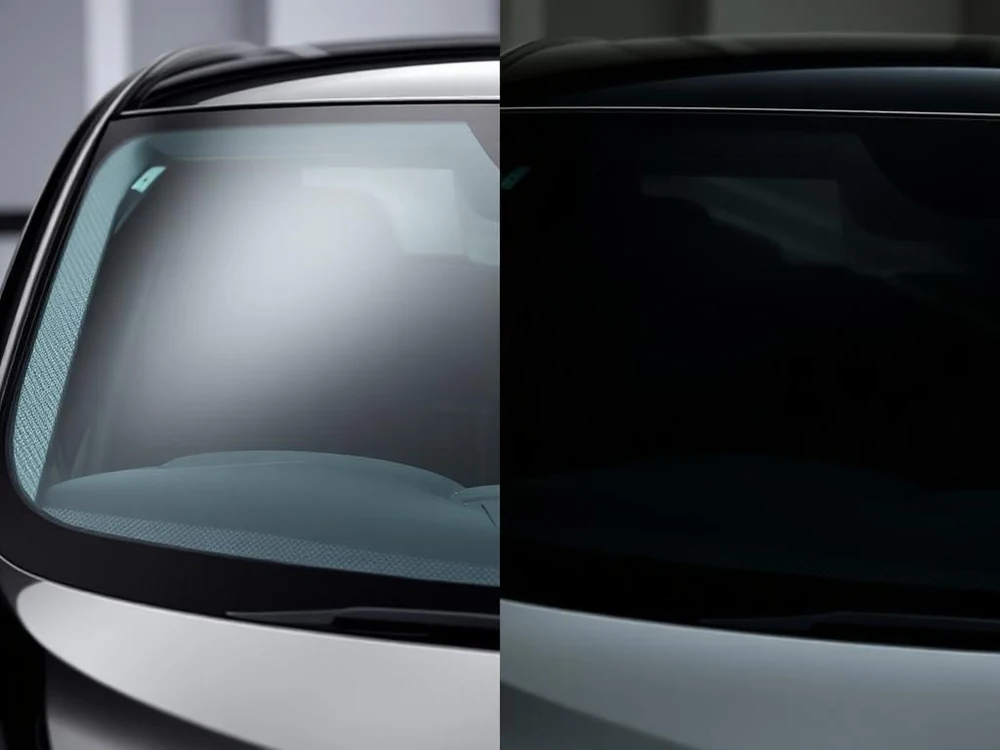
Officers use light meters approved by the Florida Department of Highway Safety and Motor Vehicles (FLHSMV). Under section 316.2955, a reading from an approved device is presumed accurate in a traffic court. Every percentage in the tint statutes also carries a measurement tolerance of plus or minus 3%.
Factory glass is never clear, so installed film often reads darker than the number printed on its packaging. The tolerance exists for measurement variation and makes a poor strategy for going darker. Dark Matter Window Tint helps drivers confirm the right shade for their own glass before installation begins.
Can a Windshield Be Tinted in Florida?
Florida allows windshield film only as a transparent strip along the top edge, under section 316.2952. That strip must stay above the AS-1 line, a small marking defined by Federal Motor Vehicle Safety Standard (FMVSS) 205. Below that line, the statute permits only required certificates, toll transponders, and certain GPS devices.
The statute sets no VLT percentage for the windshield strip. Several online guides describe it as a “non-reflective” requirement, although the statute’s actual wording is “transparent.” Florida law also lists no exception for full-windshield film, including light ceramic film marketed as nearly clear.
The only legal path to film below the AS-1 line is a medical exemption certificate issued by FLHSMV. Drivers without that certificate should limit windshield film to the visor strip.
How Dark Can Front Side Windows Be in Florida?
Front side windows must let in at least 28% of visible light and reflect no more than 25%. The rule covers the driver and front passenger windows, plus any side windows beside the driver’s seat. It applies identically to sedans, SUVs, pickup trucks, and vans.
Most tint shops stock film in 5%, 15%, 20%, 35%, 50%, and 70% shades, and 28% film is uncommon. That makes 35% the darkest common shade that usually stays legal on front-side glass. Even 35% film can read close to the limit on older glass or glass with factory tint.
Drivers in Davenport, Haines City, and Clermont often want stronger heat control without darker front windows. Dark Matter Window Tint installs nano-ceramic film, which targets infrared heat while staying at a legal front-window shade. That combination keeps the cabin cooler without inviting a ticket on the driver’s door.
What Are the Rear Side Window and Rear Windshield Tint Rules in Florida?
Passenger Cars, Sedans, and Coupes
Section 316.2954 covers every window behind the driver, and the limit depends on vehicle type rather than window position. Rear side windows and the rear windshield on passenger cars need at least 15% VLT, with reflectance up to 35%. A 20% or 15% film works here, while 5% film is too dark for a sedan.
SUVs, Trucks, and Vans
Florida calls these multipurpose passenger vehicles (MPVs), built for 10 or fewer people on truck chassis or with off-road features. Rear glass can drop to 6% VLT, so 5% film sits one point under but inside the 3% tolerance. The door jamb certification label confirms the class, such as “MPV” or “PASS CAR.”
The Side Mirror Rule
Florida requires side mirrors on both sides of any vehicle whose rear window is not see-through. Each mirror must meet section 316.294, which calls for a view at least 200 feet behind the vehicle. Most modern vehicles already comply, but older trucks and project cars deserve a quick check.
Planning window tint for a car or SUV in Polk or Lake County? Call (863) 313-1633 to compare Florida-legal shades for each window, from the 28% front limit to 6% rear glass. Get a quote built around a final meter reading that stays within Florida law.
Is 70%, 50%, 35%, 20%, or 5% Tint Legal in Florida?
The table below applies Florida’s limits to the film shades most shops stock. It assumes film is installed on clear factory glass, since readings drop when film covers tinted glass.
| Film Shade | Windshield (Below AS-1) | Front Side Windows | Rear Glass on Cars | Rear Glass on SUVs, Trucks, Vans |
|---|---|---|---|---|
| 70% | Not legal | Legal | Legal | Legal |
| 50% | Not legal | Legal | Legal | Legal |
| 35% | Not legal | Legal | Legal | Legal |
| 20% | Not legal | Not legal | Legal | Legal |
| 15% | Not legal | Not legal | Legal | Legal |
| 5% | Not legal | Not legal | Not legal | Borderline (6% limit, 3% tolerance) |
Twenty percent tint is legal on the rear glass of every vehicle but too dark for front side windows. Five percent tint is never legal up front and never legal on a passenger car’s rear glass. Windshield film below the AS-1 line is not legal at any shade without a medical certificate.
What Is a Legal Tint Setup for a Florida Car, SUV, or Truck?
Most Florida-legal setups pair a lighter front shade with darker rear glass. The combinations below assume clear factory glass and a final meter check after installation.
| Vehicle Type | Front Side Windows | Rear Side Windows and Rear Windshield | Windshield |
|---|---|---|---|
| Sedan or coupe | 35% or lighter | 15% to 35% | Transparent strip above AS-1 |
| SUV, pickup, or van (MPV) | 35% or lighter | 6% to 35% (5% film reads near the limit) | Transparent strip above AS-1 |
SUV and truck owners with factory privacy glass often tint only the front side windows and the windshield strip. Film added over factory privacy glass stacks both layers, so the combined reading must stay at 6% or higher.
Are Mirrored or Colored Window Films Legal in Florida?
Florida limits reflectance by percentage rather than banning mirrored film by name. Front side film can reflect up to 25% of visible light, while rear glass film can reflect up to 35%. Perforated rear films need at least 30% VLT, with average reflectance of 35% and no section above 50%.
Florida’s tint statutes do not list any banned film colors, despite popular claims that only black film is legal. The statutes test transmittance and reflectance on the installed glass, so any colored film must still meet those numbers.
Section 316.2954 also allows rear louvers that block no more than 50% of the driver’s view. Privacy curtains and blinds are legal only when they stay open and secured while driving on public roads.
Does Factory Privacy Glass Count Toward Florida’s Tint Limits?
Factory-tinted glass that meets FMVSS 205 is exempt from Florida’s tint statutes under section 316.2957. That explains why many SUVs and trucks leave the factory with dark rear glass the state rules never touch. Factory glazing also needs no compliance label.
Aftermarket film changes that picture, because Florida measures film as applied to the specific vehicle’s glass. The meter reading therefore includes any factory tint underneath the film. A 20% film installed over dark factory privacy glass can read well below 20%.
Many drivers want their front windows to match the dark factory glass in the back. Matching that darkness is not legal on front side windows, so front film choices start from the 28% limit.
Who Qualifies for a Florida Medical Tint Exemption?
Florida’s medical exemption under section 316.29545 covers lupus, any autoimmune disease, and other conditions requiring limited light exposure. FLHSMV form HSMV 83390 specifically lists lupus, dermatomyositis, albinism, total or facial vitiligo, and xeroderma pigmentosum. An approved certificate allows film on the windshield, side windows, and rear windows beyond normal limits.
A licensed physician, dermatologist, advanced registered nurse practitioner, or physician assistant must sign the certification section. The current form lists a $6.50 fee per vehicle and needs a copy of a Florida license or ID card. The full exemption language appears in Florida Statute 316.29545 on the Florida Senate website.
The certificate has no expiration date, but it becomes void once the listed vehicle is sold or transferred. Keeping the certificate inside the vehicle makes a roadside stop simpler. Separate exemptions cover undercover and K-9 police vehicles, certified process servers, and licensed private investigators.
Does Florida Require a Window Tint Sticker?
Yes. Section 316.2955 requires installers and sellers to provide a nonremovable vinyl label stating that the film complies with Florida law. Installers place that label on the inside left door jamb, showing the film’s trade name and installer’s business name.
The driver infraction in section 316.2956 targets film breaking the transmittance and reflectance limits. The labeling duty belongs to installers. A used car with tint but no label still deserves a meter check before purchase.
How Can Drivers Check Tint Before Buying a Used Car or Booking an Install?
A quick check before signing paperwork can prevent a tint ticket a few weeks later. Used cars from private sellers and out-of-state dealers often arrive with film that never met Florida limits.
- Look for the compliance label on the inside left door jamb, with the film brand and installer name.
- Ask for a meter reading on each front side window, not just the rear glass.
- Check the vehicle type on the federal certification label to confirm the 15% or 6% rear limit.
- Confirm that any windshield strip sits above the AS-1 marking on the glass.
- Ask how the installer handles film that fails a meter test after installation.
Removing illegal film costs time and money, and the replacement film still has to pass inspection. Confirming the numbers before installation avoids paying twice for the same glass.
What Happens When Window Tint Is Too Dark in Florida?
Illegal tint is a noncriminal traffic infraction, handled as a nonmoving violation under chapter 318. Section 318.18 sets a $30 base penalty for nonmoving violations, and county court costs raise the final total. Replacing or repairing film that was legally installed is not a violation.
Penalties are stiffer for businesses, because selling or installing noncompliant film is a second-degree misdemeanor under section 316.2956. That criminal exposure explains why reputable Florida installers decline illegal front-window shades.
These statutes define a motor vehicle as one registered, or required to be registered, in Florida. New residents and seasonal visitors who register a car here should confirm their existing tint meets Florida limits.
Staying Within Florida Tint Law Starts With the Right Numbers
Florida’s tint law requires 28% VLT and 25% maximum reflectance on front side windows for every vehicle. Rear glass needs 15% on passenger cars or 6% on MPVs, with reflectance capped at 35%. Windshield film stays above the AS-1 line, and medical exemptions run through FLHSMV.
Choosing film with those limits in mind avoids a ticket and a costly removal later. Drivers who want legal heat control can compare car window tinting packages for Florida drivers before booking. The team at Dark Matter Window Tint matches each window’s shade to Florida law across Polk and Lake County.
Need ceramic or carbon film in Davenport, FL, or anywhere in Polk and Lake County? Call Dark Matter Window Tint at (863) 313-1633. The team will plan a Florida-legal shade for every window, plus a transparent windshield visor strip above the AS-1 line.
Frequently Asked Questions
Is 20% tint legal on the front windows of a car in Florida?
No. Florida requires front side windows on every car, SUV, and truck to let in at least 28% of visible light, and 20% film falls well below that. A 20% shade is legal on rear side windows and the rear windshield, so many drivers pair 35% film up front with 20% film behind the driver.
Can I put 5% limo tint on the back windows of my SUV in Florida?
Florida allows rear glass on SUVs, trucks, and vans to go as low as 6% VLT. A 5% film sits one point under that, inside the 3% tolerance band in s. 316.2955, so the meter reading on your installed glass settles the question. On a sedan, 5% rear tint is illegal because cars need 15%.
Is it legal to tint my whole windshield in Florida with a light ceramic film?
No. Florida only allows a transparent strip of film above the AS-1 line at the top of the windshield. The statute has no exception for clear or light ceramic film below that line. The only way to legally add film below the AS-1 line is a medical exemption certificate issued by FLHSMV.
How much is a window tint ticket in Florida, and is it a criminal charge?
A tint ticket is a noncriminal, nonmoving infraction in Florida. Section 318.18 sets a $30 base penalty, and county court costs push the total higher depending on where the ticket is issued. Shops that install illegal film face a second-degree misdemeanor, which is a criminal charge.
How do I get a medical exemption for darker window tint in Florida?
Submit FLHSMV form HSMV 83390 with a statement signed by a licensed physician, dermatologist, ARNP, or physician assistant. Qualifying conditions include lupus, albinism, and other light-sensitive conditions. The fee is $6.50 per vehicle, and the certificate stays tied to that one vehicle.
Does Florida’s tint law apply if my car is registered in another state?
Florida’s tint statutes define a motor vehicle as one registered, or required to be registered, in Florida. Once you become a resident and register your car here, your tint must meet Florida limits: 28% on front side windows and 15% or 6% on rear glass, based on your vehicle type.